
Eating more vegetables on a low FODMAP diet is absolutely possible – and delicious.
The key is choosing reliably low-FODMAP options, mixing up colors for variety, changing up cooking methods, and using smart shortcuts like canned or pickled veggies.
Below are simple, practical ways to build veggie-rich meals that are gentle on your gut.
Know Safe Veggies To Eat
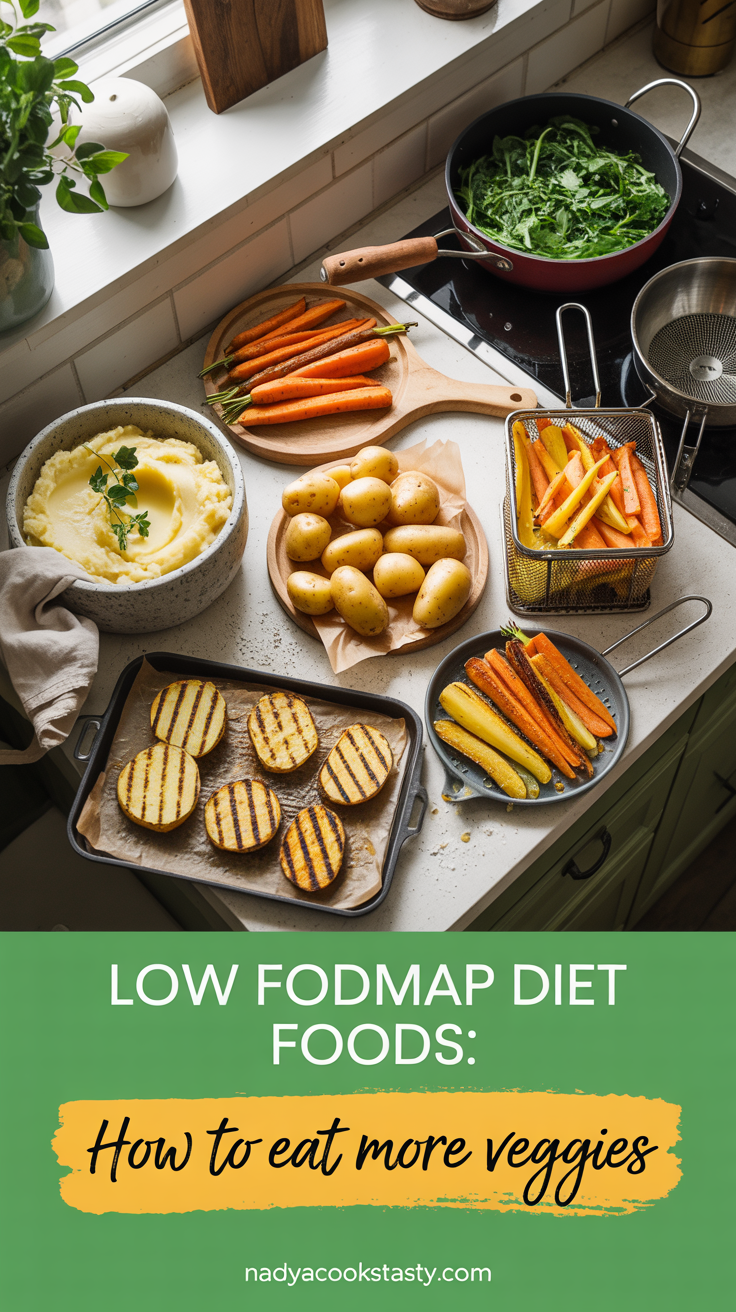
Build your plate around vegetables that are FODMAP-free or very low in standard serves.
Great everyday picks include carrots, parsnips, potatoes, olives, and leafy greens like spinach, collard greens, and arugula, plus mild sprouts such as bean or broccoli sprouts.
Make them a habit: sprinkle chopped greens into an omelette, add carrots or sprouts to salads, and fold mashed potato or grated carrot into savory bakes.
Keep portions sensible and note your personal tolerance: these choices give you an easy, reliable base to work from.
Eat The Same Vegetable But In Different Colors
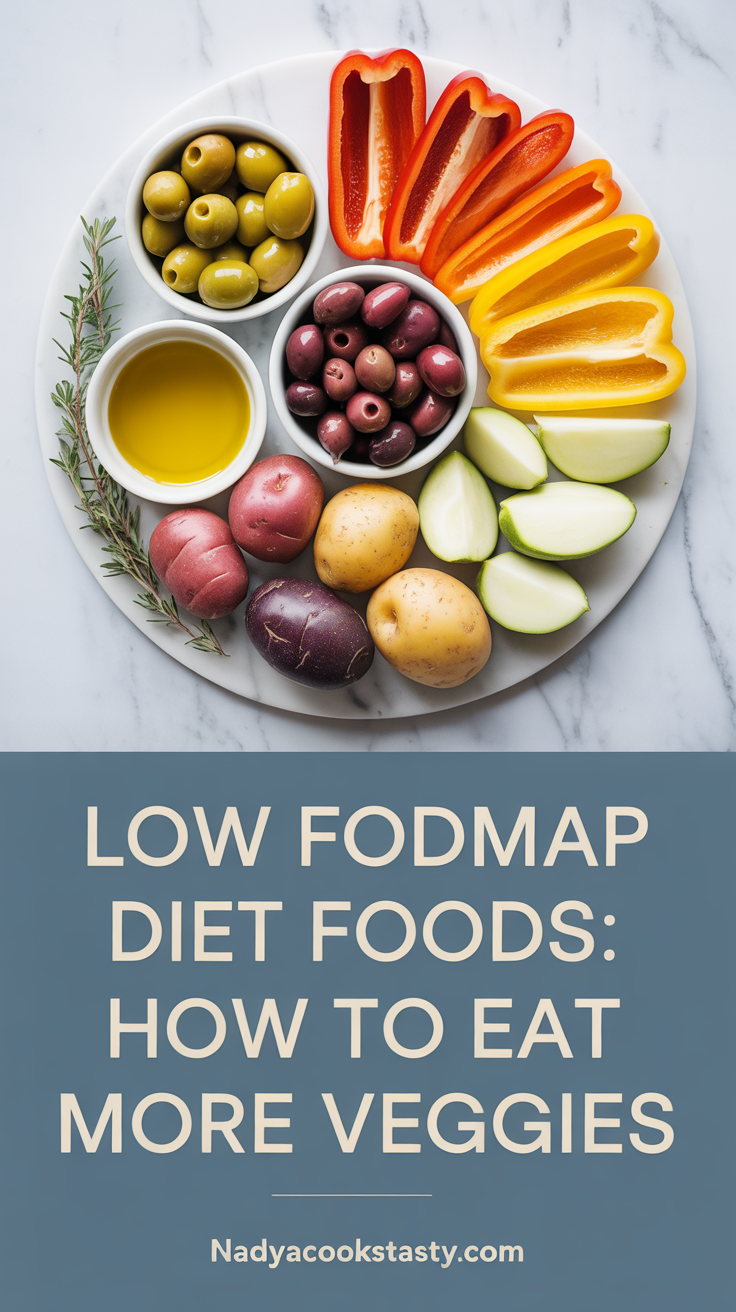
An easy way to increase variety without changing your shopping list: eat the same vegetable in multiple colors.
For example, try olives in green, black, or purple (Kalamata).
Rotate potatoes with red-, blue-/purple-, and white-skinned varieties.
If you tolerate bell peppers/capsicum, choose red, orange, and yellow for sweetness and color; note that green bell pepper has a different FODMAP profile and should be used in this swap.
Color mixing keeps meals exciting and boosts a range of antioxidants without bumping up FODMAPs in typical serving sizes.
Try Different Ways of Cooking The Same Veggie
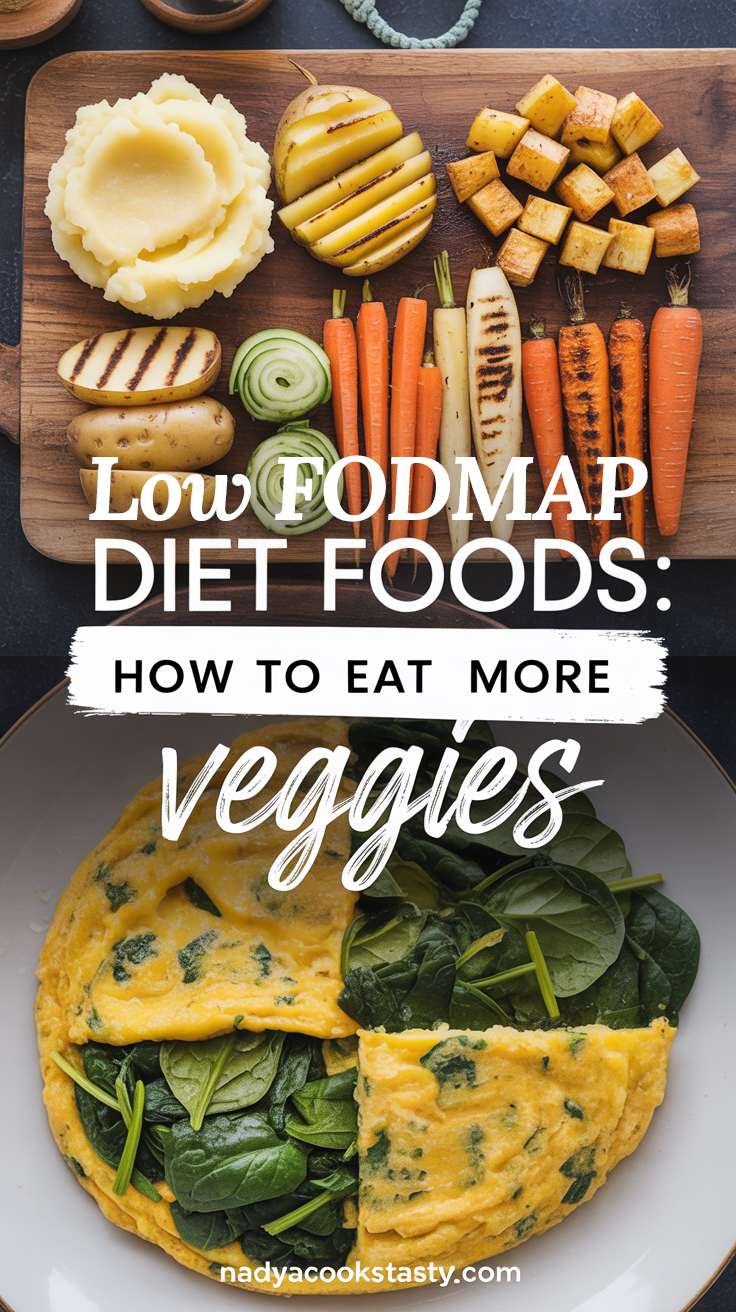
Prep changes everything.
With potatoes alone you can mash, roast, grill, or air-fry for totally different textures and flavors.
Do the same with carrots: steam, roast, or spiralize, and leafy greens: quick sauté vs. folding into eggs or soups.
Note that boiling and discarding the cooking water can reduce some water‑soluble FODMAPs in certain vegetables, while roasting concentrates flavor without adding FODMAPs.
Same vegetable, new vibe: Your gut gets a break while your palate gets variety.
Opt For Canned Veggies
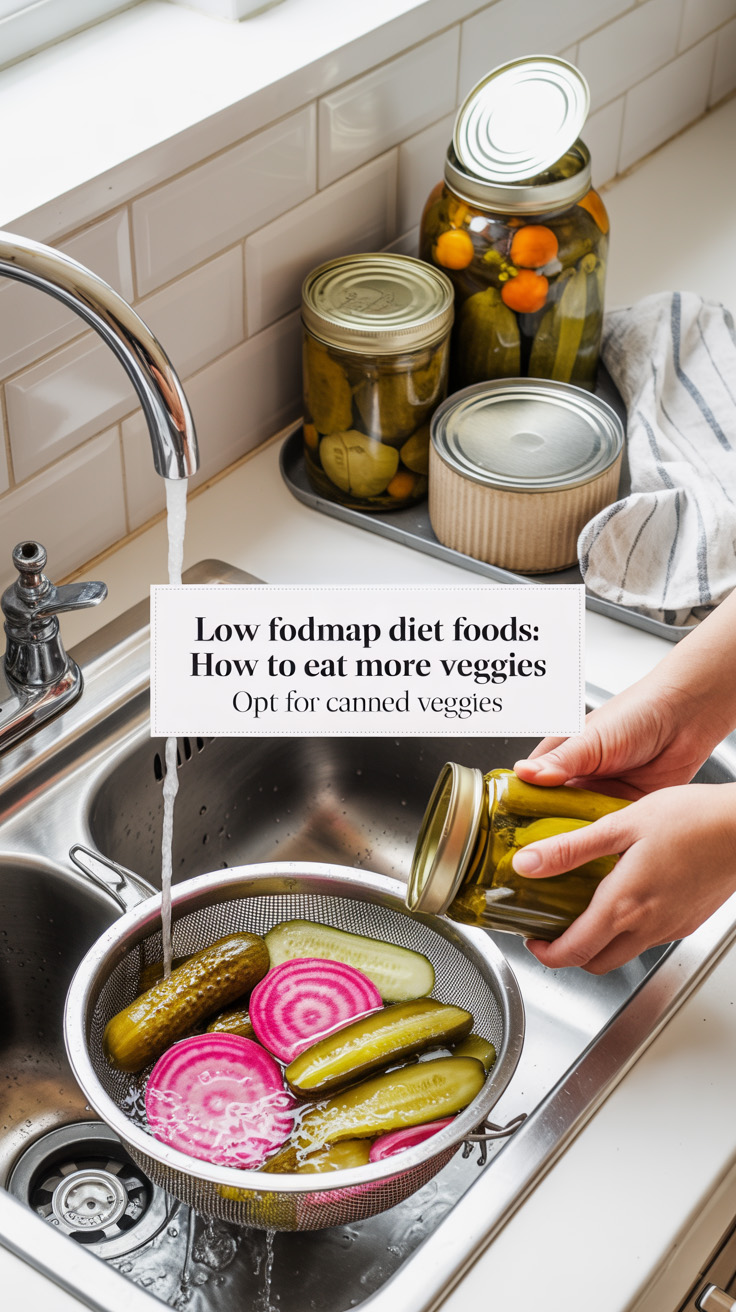
Some FODMAPs are water‑soluble and leach into the brine during canning or pickling.
When you drain (and ideally rinse) the vegetables, the final portion can be lower in FODMAPs than the raw version.
Helpful examples:
- pickled beetroot (drained) has typically no FODMAP while raw beetroot does;
- simple cucumber pickles can be suitable if the brine is free from onion/garlic – and you discard it – as opposed to regular cucmbres;
- tomatillos marinated in brine also have no FODMAP as opposed to the raw ones.
Always read labels, drain well, and keep portions moderate.
Now To You!
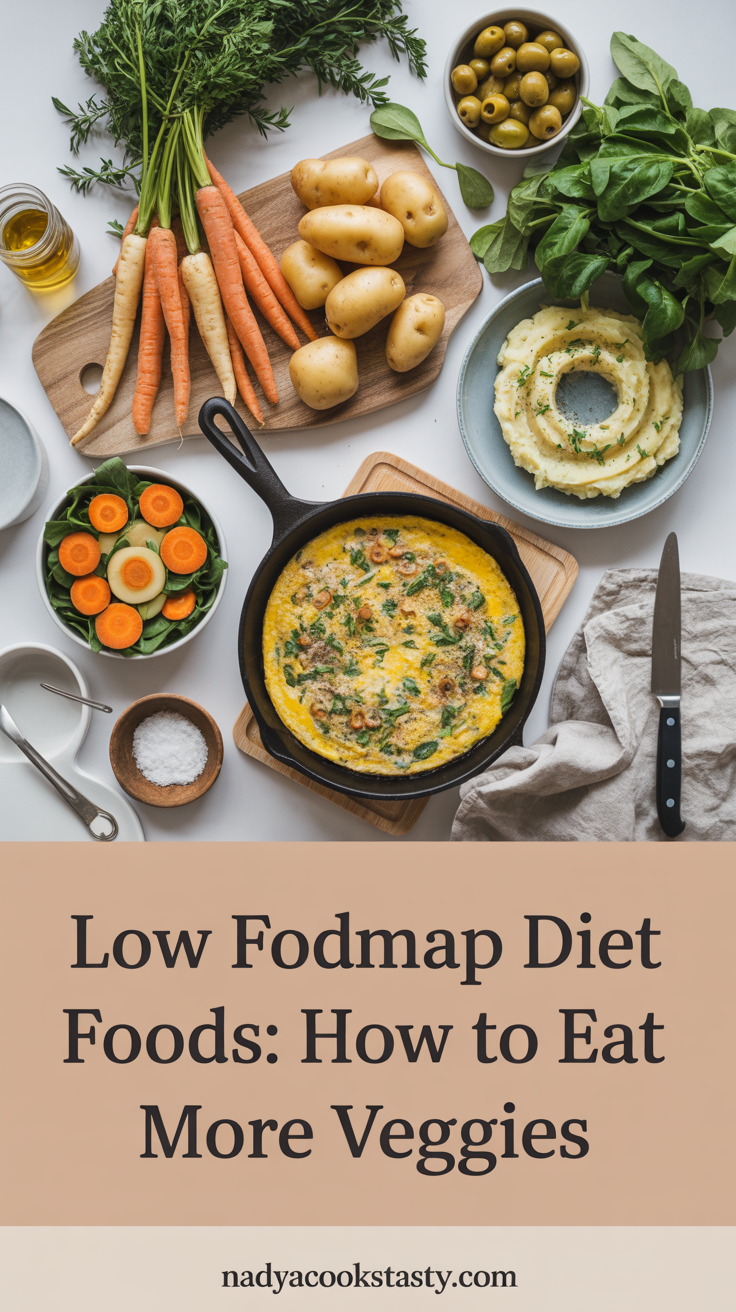
More veggies on a low FODMAP diet comes down to smart choices: lean on reliably low-FODMAP staples, switch up colors for variety, change cooking methods to keep meals interesting, and use drained canned/pickled options when helpful.
Keep portions in check, listen to your body, and check products and serving sizes with a trusted resource (like the Monash FODMAP app) or a dietitian for personalized guidance.
Enjoy the color, crunch, and confidence on your plate.